






Crash Games: Mechanics, Multipliers and Probability
The digital gaming industry continuously innovates, creating entirely new genres of entertainment that captivate modern players. Among these innovations, “crash games” have emerged as one of the most popular and exhilarating categories in the wager-based gaming sector. For players in specific markets, such as Nepal, localized platforms like NK101—established in 2026—have seamlessly integrated these fast-paced games into a secure, reputation-based ecosystem. Offering support in English and Nepali, zero withdrawal fees, and a 50% deposit bonus for new users upon free mobile registration, platforms like this make exploring new game mechanics accessible and straightforward. This comprehensive guide breaks down the mechanics, probability models, and features of crash games to ensure players understand how multipliers function, how randomness dictates outcomes, and how to approach these games responsibly.
What Are Crash Games?
Definition and Overview of Crash-Style Games
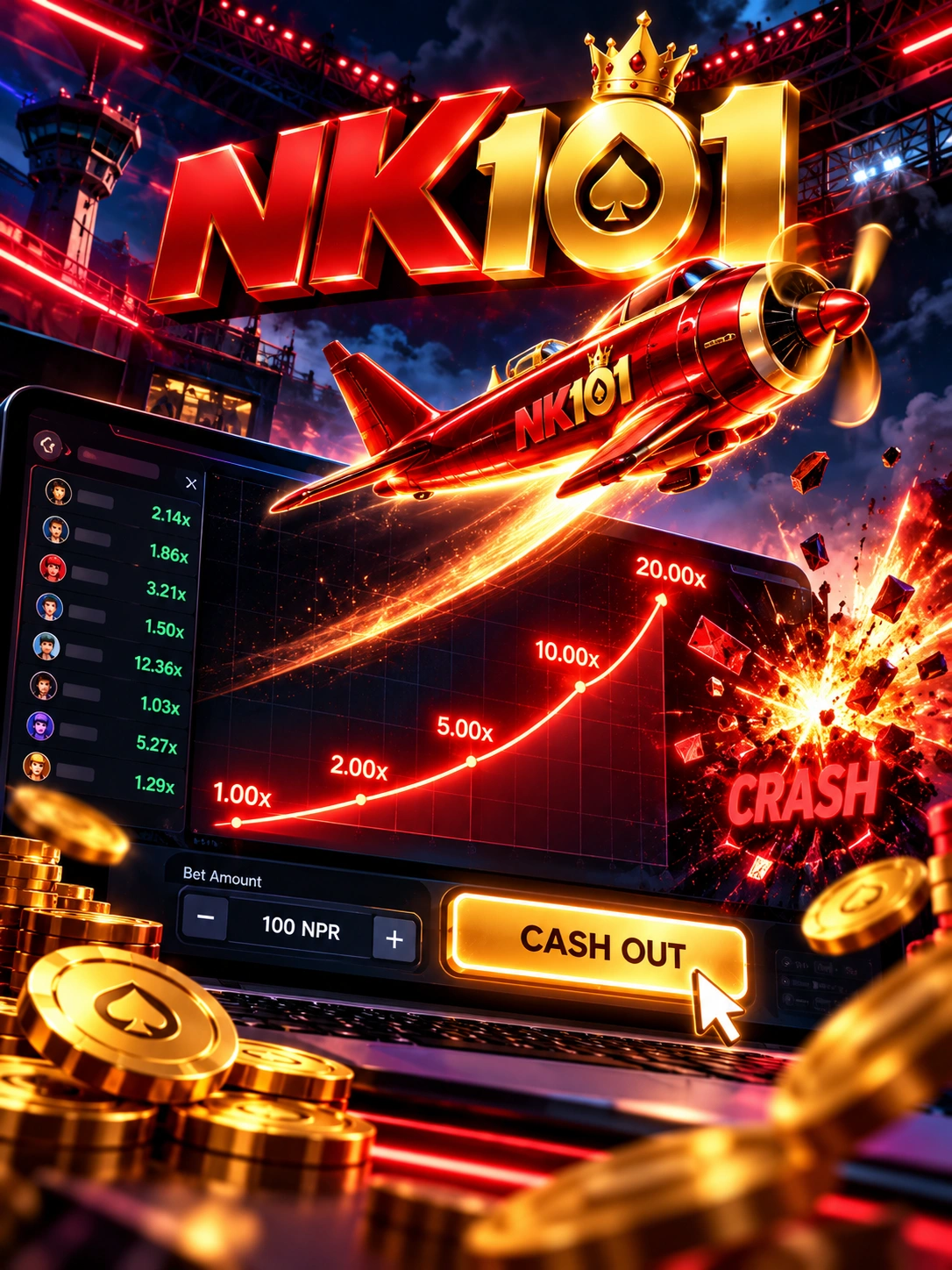
Crash games are a unique category of digital, wager-based arcade games where the primary objective is to cash out a rising multiplier before a sudden “crash” occurs. Unlike games of complex strategy or traditional card games, crash games operate purely on timing and risk tolerance. Players place a wager—utilizing Nepalese currency on platforms like NK101, with minimum deposits starting at just 100 Rupees—and watch a graphical element ascend, bringing the multiplier up with it. The longer a player waits, the higher the potential payout, but if the game crashes before they secure their funds, the original wager is lost.
Common Visual Concepts and Game Formats
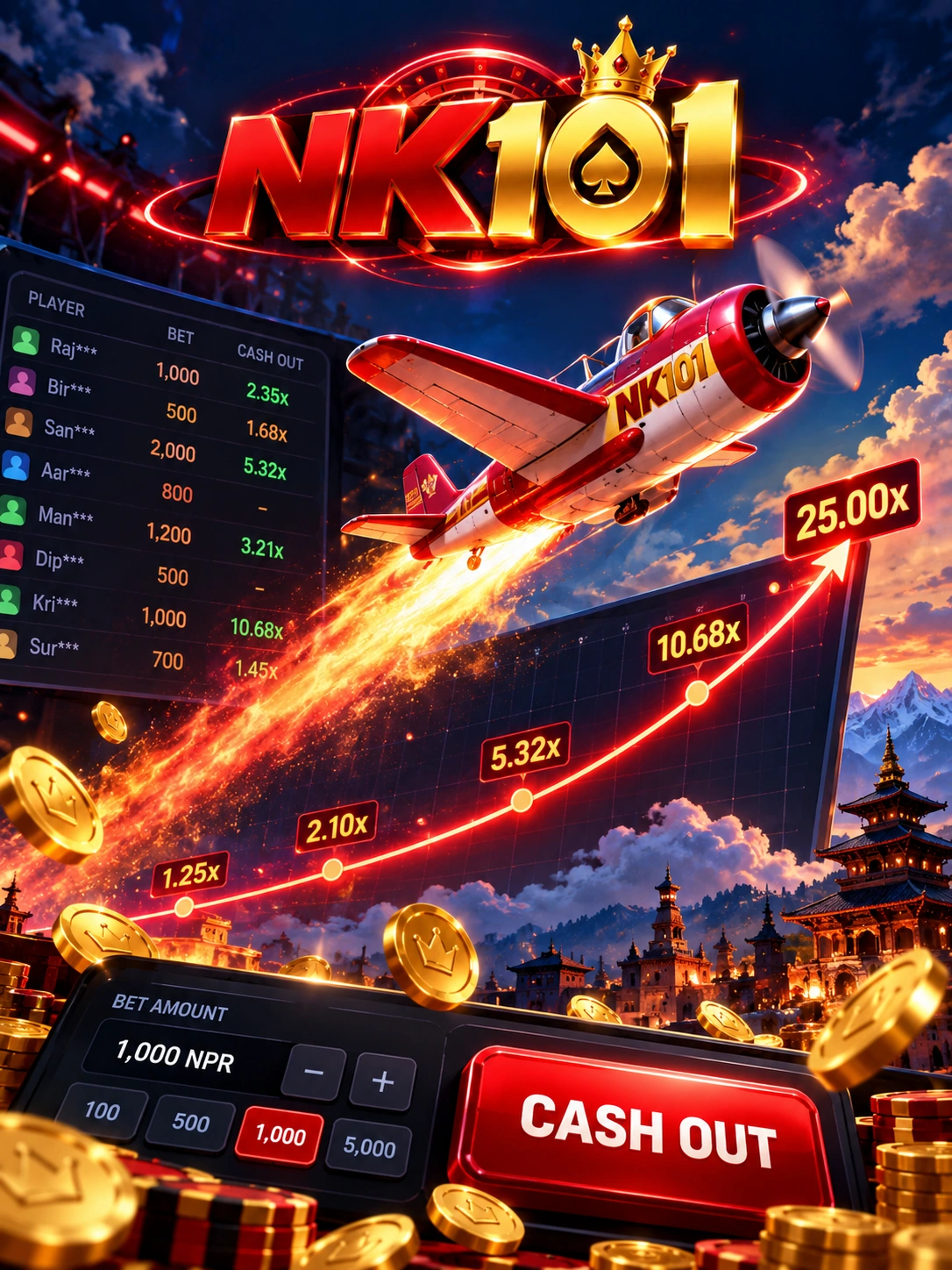
The core mechanic is highly adaptable to various visual themes. The most recognizable format features a graph with an upward-trending curve. As a central object—such as an airplane, a stock market line, or a heartbeat monitor—travels along this curve, the numbers on the screen rapidly increase. The visual tension is a deliberate design choice, creating a sense of urgency as the graphical element accelerates across the screen, mimicking the feeling of an expanding financial bubble right before it bursts.
Differences Between Crash Games and Traditional Slot Games
While both rely on Random Number Generators (RNG), crash games differ significantly from traditional slot mechanics. In a slot game, the player presses a button and passively waits for the reels to stop; the outcome is predetermined the millisecond the button is pressed, and the player has no further input. In a crash game, the player actively participates while the round is live. They must make a real-time, high-pressure decision on exactly when to exit the market. This illusion of control makes crash games feel highly interactive, even though the actual crash point is mathematically predetermined before the round begins.
How Crash Games Work
The Round-Based Game Structure
Crash games operate on a continuous, multiplayer loop. There is a distinct betting window (usually 5 to 10 seconds) during which all players globally participating in that specific room place their stakes. Once this window closes, the round commences simultaneously for everyone. The collective nature of the round means players can see when others are cashing out, adding a psychological layer of peer pressure to the experience.
Understanding a Rising Multiplier
The central component of the game is the multiplier, which always starts at 1.00x. As the round progresses, this number ascends incrementally (e.g., 1.15x, 1.40x, 2.50x, 10.00x). If a player has wagered 100 Rupees and cashes out at 2.50x, their immediate return is 250 Rupees. The speed at which the multiplier rises is not strictly linear; it often accelerates exponentially, meaning the jump from 1.00x to 2.00x might take several seconds, but the jump from 10.00x to 20.00x can happen in a flash.
The Meaning of a Crash or Round-End Event
The “crash” is the definitive end of the round. The rising object suddenly flies away, explodes, or drops off the screen, and the multiplier freezes in red text. Any player who has not clicked the “Cash Out” button before this exact millisecond loses their initial stake. The crash can happen at an incredibly high multiplier, contributing to maximum potential winning payouts of up to 100 million Rupees on supported platforms, or it can happen instantly at 1.00x, resulting in an immediate loss for the entire lobby.
Why Each Round Has an Uncertain Outcome
The suspense of a crash game stems from its absolute unpredictability. The game does not operate on a cyclical algorithm that ensures a high multiplier follows a series of low crashes. Each round is an isolated, independent mathematical event generated by certified software. The uncertainty is the defining feature of the genre, ensuring that no amount of observation can reveal when the current round will terminate.
Common Crash Game Variations

Aircraft-Themed Games
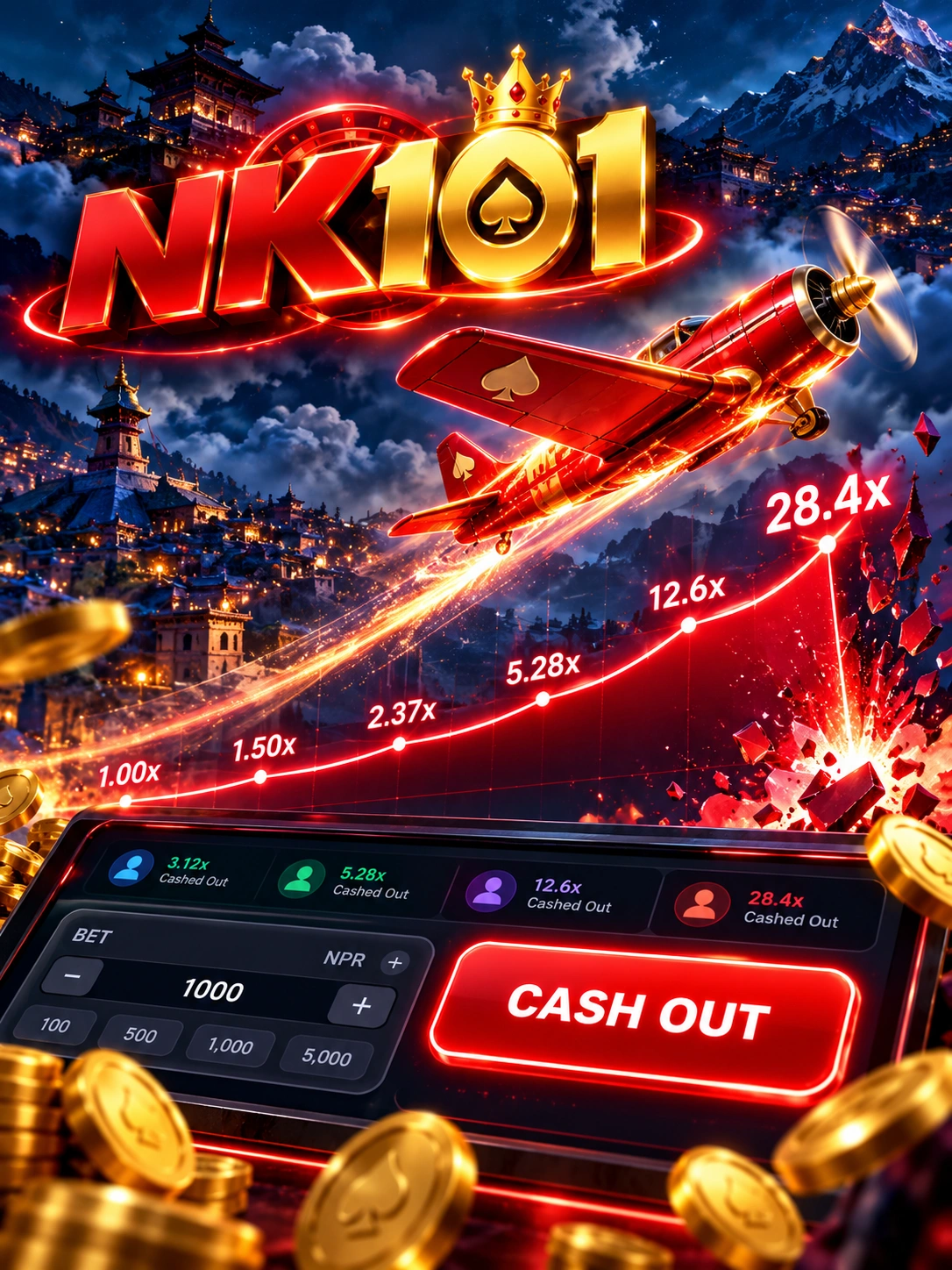
Aircraft themes are the pioneering aesthetic of this genre. Games developed by major providers often feature a retro airplane taking off from a runway. The plane ascends into the sky, representing the rising multiplier, and the round concludes when the plane rapidly accelerates and flies entirely off the screen. These titles are frequently featured as “hot games” on main platform homepages due to their massive global popularity.
Rocket and Space-Themed Games
Space exploration naturally lends itself to the crash mechanic. In these variations, a rocket ship or an astronaut launches into the atmosphere. The multiplier climbs as they pass through the stratosphere and into deep space. The “crash” event is typically represented by the rocket exploding or a meteor striking the astronaut, providing a dramatic visual conclusion to the round.
Multiplier-Based Arcade Formats
Moving away from vehicles, developers have created abstract arcade formats. Some games feature a balloon that inflates until it pops, while others mimic cryptocurrency trading screens where a green candle rises until a sudden market crash occurs. These variations appeal to different demographics while retaining the exact same mathematical probability engines beneath the surface.
Differences in Rules and Presentation
While the core math is identical, variations differentiate themselves through distinct interface rules and presentation styles.
- Social Interaction Tools: Integrated live chat boxes and scrolling leaderboards allow users to communicate, share strategies, and view the massive payouts secured by other participants in real-time.
- Dual Betting Interfaces: Many modern crash games allow players to place two separate, independent wagers in a single round, enabling hybrid risk strategies (e.g., cashing one out early for safety, letting the other run for a high multiplier).
- Auto-Cashout Functions: Players can pre-program the software to automatically cash out their wager the moment the multiplier hits a specific target (e.g., exactly 2.00x), removing human reaction time from the equation.
Understanding Multipliers and Probability
What Is a Multiplier?
A multiplier is a numerical coefficient used to determine a player’s total payout. It is applied directly to the base stake. Because platforms like NK101 support flexible deposit and withdrawal limits ranging from 100 to 2,000,000 Rupees, understanding the multiplier is essential for bankroll management. A 5x multiplier turns a conservative 500 Rupee bet into 2,500 Rupees, while simultaneously offering high-rollers the chance to multiply maximum stakes into massive payouts.
The Relationship Between Multiplier Values and Probability
There is an inverse relationship between the size of a multiplier and the statistical probability of the game reaching it. A crash at 1.20x has a very high probability of occurring in any given round. Conversely, a crash at 100.00x is a rare statistical anomaly. The game is programmed to balance these probabilities to maintain the platform’s house edge while still providing the thrilling possibility of a massive win.
Why a Higher Multiplier Does Not Guarantee a Particular Result
Because RNG dictates the game, chasing a high multiplier is purely a matter of risk tolerance, not strategic certainty. If a player sets their auto-cashout to 50.00x, they must understand that the vast majority of rounds will crash long before reaching that number. A high multiplier target guarantees a lower win frequency; it does not guarantee that the game is eventually “forced” to reach that target to reward the player.
The Difference Between Theoretical Models and Observed Results
Game providers publish a Return to Player (RTP) percentage, often around 97% for crash games. This theoretical model states that over millions of rounds, the game will return 97% of all wagered funds. However, observed results in a single 30-minute gaming session will differ wildly from this theoretical average. A player might experience a terrible streak of instant crashes or a highly lucrative streak of 10x multipliers, representing the short-term variance inherent to the math model.
Randomness and Result Verification

Random Number Generation
At the heart of every crash game is a Random Number Generator (RNG). When the betting window closes, the RNG immediately generates a massive, complex string of numbers that translates into a specific multiplier value (the crash point). This number is finalized before the visual animation of the plane or rocket even begins moving on the player’s screen.
What Provably Fair Systems Mean, Where Applicable
Many modern crash games utilize a cryptographic technology known as “Provably Fair.” This system guarantees that neither the player nor the platform can manipulate the outcome of the round. It works by generating a “server seed” (provided by the game operator) and a “client seed” (generated by the players’ browsers). These seeds are combined cryptographically before the round starts to generate the crash point, ensuring absolute transparency.
Understanding Verification Data and Provider Documentation
In Provably Fair games, the cryptographic hashes for each round are publicly available in the game’s interface. After a round concludes, players can copy these alphanumeric strings and run them through independent third-party verification calculators online. If the resulting number matches the crash point that occurred in the game, it mathematically proves that the round’s outcome was generated fairly and was not altered mid-flight.
Why Verifiable Results Are Not Predictable Results
A critical distinction must be made: verifiable does not mean predictable. Provably Fair technology only allows a player to verify the fairness of a round after it has already crashed. Because the client seed and server seed are cryptographically hashed, it is mathematically impossible to reverse-engineer the hash to discover the crash point before the round begins. The system guarantees fairness, not foresight.
Crash Game History and Prediction Myths
Can Previous Rounds Predict the Next Outcome?
The most persistent myth in crash gaming is that analyzing the history of previous rounds can reveal when the next massive multiplier will occur. Because the RNG resets completely for every single round, the game has no “memory.” A sequence of five consecutive crashes at 1.05x does not statistically increase the likelihood that the sixth round will soar to 50.00x.
Common Misunderstandings About Repeated Patterns
Human brains are wired to find patterns, leading to several dangerous misunderstandings when playing probability-based games.
- The “Due for a Win” Fallacy: Believing that after a long losing streak, a massive multiplier is mathematically guaranteed to appear to balance the scales.
- Time of Day Myths: The false assumption that games pay out higher multipliers during specific hours (e.g., late at night or during off-peak times) based on server traffic.
- Pattern Tracking: Attempting to record sequences of red and green multipliers in a spreadsheet to forecast an algorithmic rhythm that simply does not exist.
Why Third-Party Prediction Claims Require Caution
The internet is flooded with third-party software, Telegram bots, and social media influencers claiming to have “cracked the algorithm” of popular crash games. They often sell subscription services guaranteeing accurate prediction signals. These claims are entirely fraudulent. Because outcomes are generated by server-side RNG or Provably Fair cryptography, no external application can intercept or predict the result before it happens.
The Difference Between Statistical Analysis and Certainty
While players cannot predict outcomes, they can use statistical analysis to inform their betting strategies. Understanding that a 2.00x multiplier has roughly a 48-49% chance of hitting allows a player to structure their bankroll logically. Statistical analysis is a tool for managing risk and setting realistic cash-out expectations; it should never be confused with the certainty of knowing what the next round holds.

Technical Features and Interface Design
Live Multiplier Displays
The live multiplier display is the focal point of the interface. It must be highly responsive and synchronized globally. A delay of even a few milliseconds between the server calculating the crash and the player’s screen displaying it could result in an unfair loss. Top-tier providers optimize this visual feed to ensure zero lag, ensuring that when a user clicks “Cash Out,” the command registers instantly.
Round Histories and Recent Results
Across the top of the game screen, a scrolling ticker displays the crash points of the last 15 to 30 rounds. These are typically color-coded (e.g., blue for crashes under 2.00x, purple for crashes between 2.00x and 10.00x, and pink for massive multipliers). While this history cannot predict the future, it provides absolute transparency regarding the game’s recent volatility.
Real-Time Updates and Data Delays
Because crash games require precise timing, a stable internet connection is paramount. If a player is playing on a cellular network and their connection drops while the multiplier is rising, they cannot click the cash-out button. To combat this, platforms strongly recommend utilizing the Auto-Cashout feature; if the connection drops, the server will still automatically secure the funds if the target multiplier is reached.
Differences Between Game Providers
Various software developers integrate into platforms like NK101, each bringing their own distinct technical flair to the crash mechanic.
| Provider / Game Style | Visual Theme | Social Features | Multiplier Speed |
| Traditional Aviator Style | Retro Aircraft, Red/Black UI | Live global chat, live bets visible | Gradual, accelerating curve |
| Space & Sci-Fi | Astronauts, Rockets, Lasers | Emotes, limited chat | Highly erratic, sudden spikes |
| Crypto & Trading | Candlestick graphs, neon lines | Minimalist interface | Steady, linear progression |
| Arcade & Balloon | Balloons, cartoon graphics | Focused on solo UI | Slow build-up, sudden pop |
Risk Awareness and Legal Considerations
Understanding the Financial Risks of Wager-Based Games
Crash games involve genuine financial risk. The rapid speed of the rounds means that a player can place dozens of wagers in a matter of minutes. Without strict bankroll management, this can lead to swift financial depletion. Establishing firm limits on platforms like NK101—which supports safe, reliable transactions and processes withdrawals in just 1 minute—ensures that players can enjoy the entertainment value without overextending their finances.
Why Rapid Rounds Can Make Risk Harder to Assess
The sheer speed of crash games triggers adrenaline and dopamine responses, often clouding rational judgment. When a new round begins every ten seconds, players have little time to process a loss before being prompted to bet again. This continuous loop can easily lead to “chasing losses,” where a player abandons their strategy and bets recklessly large amounts in an attempt to instantly recover previously lost funds.
Age Restrictions and Local Gambling Laws
As wager-based products, crash games are strictly regulated. Participation is legally limited to adults, generally requiring users to be at least 18 years old. Secure platforms enforce these legal restrictions stringently. For instance, NK101 utilizes a reputation-based security framework supported by mandatory phone number verification to authenticate users and protect accounts from unauthorized access or underage usage.
Identifying Misleading Claims About Guaranteed Outcomes
To engage safely with digital gaming, users must be able to identify predatory or misleading claims. Legitimate platforms rely on transparency and certified RNG.
- Hidden Withdrawal Conditions: Predatory platforms often trap funds. Reliable ecosystems maintain clear, transparent limits (like 100 Rupee minimums) and process transactions rapidly without hidden fees.
- Promises of “Guaranteed” Returns: Any platform, affiliate, or software claiming to guarantee wins or predict multipliers is fundamentally dishonest.
- Lack of Provably Fair Data: If a game does not provide hash seeds or publicly accessible RTP documentation, its fairness cannot be verified.